Classifying Automobiles According to Design

Dr Temi Wisdom and Adeniran Ebunmide (Turbonerdz)
Shine Brite Entertainment
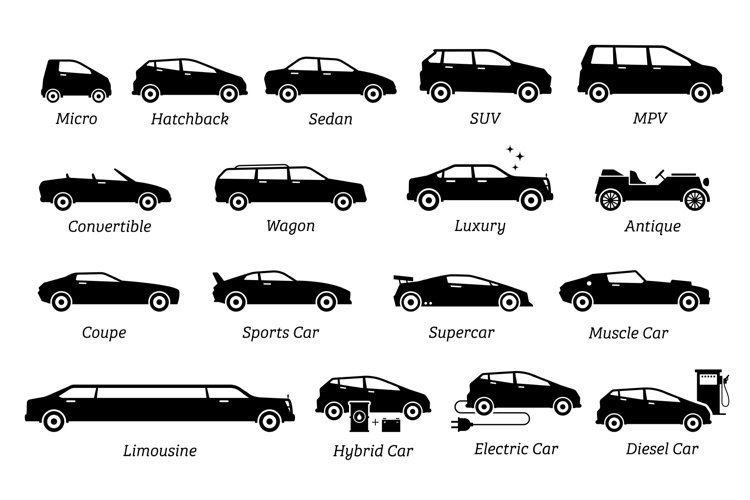
What Are Those Vehicles Really Called?
Automobiles are one of the most common means of transportation in the modern world. Most people either own one or regularly travel in one. They come in different models, colors, designs, and sizes. Without a doubt, cars have become essential for covering both short and long distances quickly and efficiently. Research suggests that whether it’s commuting to work, spending quality time with family, dropping the kids at school, or going for a random drive, the average person may spend up to 6–7 hours a week behind the wheel.
With so much variety in today’s automotive space, it’s easy to forget that the first automobiles looked nothing like what we drive today. Early inventions such as the Benz Patent-Motorwagen and the Victorian Combination by Société Parisienne laid the foundation for modern vehicles. Compared to today’s machines, however, they were worlds apart. Over time, vehicle designs have evolved for optimization, comfort, safety, and practicality. This evolution has led to various body styles and classifications. So that vehicle you casually call a “car”, what is it actually called? Let’s break it down.
Passenger Cars
Passenger cars are the most common vehicles on our roads. They typically have lower ground clearance and carry fewer passengers or cargo compared to larger vehicle categories.
• Sedan (or Saloon) - The most popular passenger car type. Sedans typically have four doors and follow a classic three-box design, separate compartments for the engine, passengers, and cargo (boot/trunk). Door styles may vary (swan, suicide, gullwing, etc.), but the core structure remains similar. The Toyota Corolla remains one of the best-selling sedans of all time.
• Coupe - Traditionally a two-door car with a sloping rear roofline. Coupes prioritize style and sportiness over rear-seat practicality. While some modern coupes have four doors, the defining feature remains the sleek roofline and performance-focused appeal. Examples include the BMW M4 and Audi R8. Although the coupe design generally refers to “small” cars, some SUVs like the famous Mercedes Benz GLC and GLE coupes have adopted the sloping roof styling.
• Hatchback - Unlike sedans, hatchbacks use a two-box design, combining passenger and cargo space. The rear door is hinged at the roof and opens upward. They may come in two or four doors (excluding the hatch itself). Hatchbacks are compact, practical, and often performance-oriented. The Honda Civic Type R is a fan favorite in this segment.
• Station Wagon (Estate, Touring, or Universal) - Think of it as a sedan with extended cargo space. Wagons maintain four doors but stretch the roofline further back for increased practicality. Many offer optional third-row seating, and the rear seats often fold flat to expand cargo capacity. Though less trendy today, they remain popular among German manufacturers. P.S – one of my favorites in this section is the Audi RS6 Avant.
• Convertible (Cabriolet) - A convertible features a retractable or removable roof, offering an open-air driving experience. Stylish and fun, just hope you’re not caught in an unexpected downpour. It is also colloquially known as a drop top.
Larger Vehicles These vehicles generally sit taller, offer higher ground clearance, and provide more interior and cargo space.
• Sport Utility Vehicle (SUV) - SUVs typically feature a tall, boxy build and high ground clearance. Traditional SUVs are built on a body-on-frame (truck-based) platform, meaning the body and chassis are separate. They often come with all-wheel or four-wheel drive, making them capable off-roaders. Many also have strong towing capacity (approximately 1,800 kg to 4,500 kg). Common examples include the Toyota Land Cruiser and Toyota Sequoia.
• Crossover (CUV) - A crossover blends characteristics of a sedan and an SUV. It offers car-like drivability and fuel efficiency while maintaining elevated seating and cabin space. Unlike traditional SUVs, crossovers use a unibody construction, meaning the body and frame are integrated. They are generally less rugged but more efficient. Popular examples include the Toyota RAV4, Honda CR-V, and Kia Sportage.
• Minivan - Minivans prioritize maximum passenger and cargo space. They are typically tall and boxy, feature sliding rear doors, and often include three rows of adjustable seating. The Toyota Sienna remains a standout in this category, alongside the Honda Odyssey and Nissan Quest.
• Pickup Truck - Pickup trucks feature a passenger cab (often with two rows of seats) and an open cargo bed at the rear for hauling. While modern designs like the Tesla Cybertruck have reimagined the aesthetic, the core purpose remains utility and durability. Common examples include the Toyota Hilux and Ford F-150.
Other Notable Body Styles
• Limousine - Essentially a stretched sedan or SUV with an extended wheelbase and a partition separating driver and passengers. Typically associated with luxury and executive transport.
• Sports Car - High-performance vehicles designed for speed, agility, and handling. Often two-seaters and constructed with lightweight materials. Brands in this space include Ferrari, Porsche, and Lamborghini, with new performance-focused manufacturers emerging regularly.
Many other car variations exist, such as camper vans, roadsters, and microcars, but they are largely derived from the core classifications above.
Next time you see a vehicle on the road, look twice because it isn’t just a “car.” It has a specific design philosophy, purpose, and engineering identity behind it. And now, you know what to call it.
Writer - Dr Temi Wisdom
Editor - Adeniran Ebunmide (TurboNerdz)